CrochetPatternGen

Crochet Blanket Patterns

Free blanket charts in every style — ripple, granny square, temperature, gingham, and motifs — all with stitch counts included.

A blanket chart removes the two things that stall blanket projects: counting and guessing. Each pattern below is a stitch-ready grid — every cell is one stitch, every color is counted, and the layout is planned before you buy yarn. Stitch-pattern charts (ripple, gingham, granny) show the repeat you work across the blanket; motif and layout charts show the whole design.

This is the blanket hub: start here, then drill into the style you want. We have dedicated pages for ripple blankets, granny square blankets, and temperature blankets, plus soft motifs for baby and newborn gifts.
The free charts

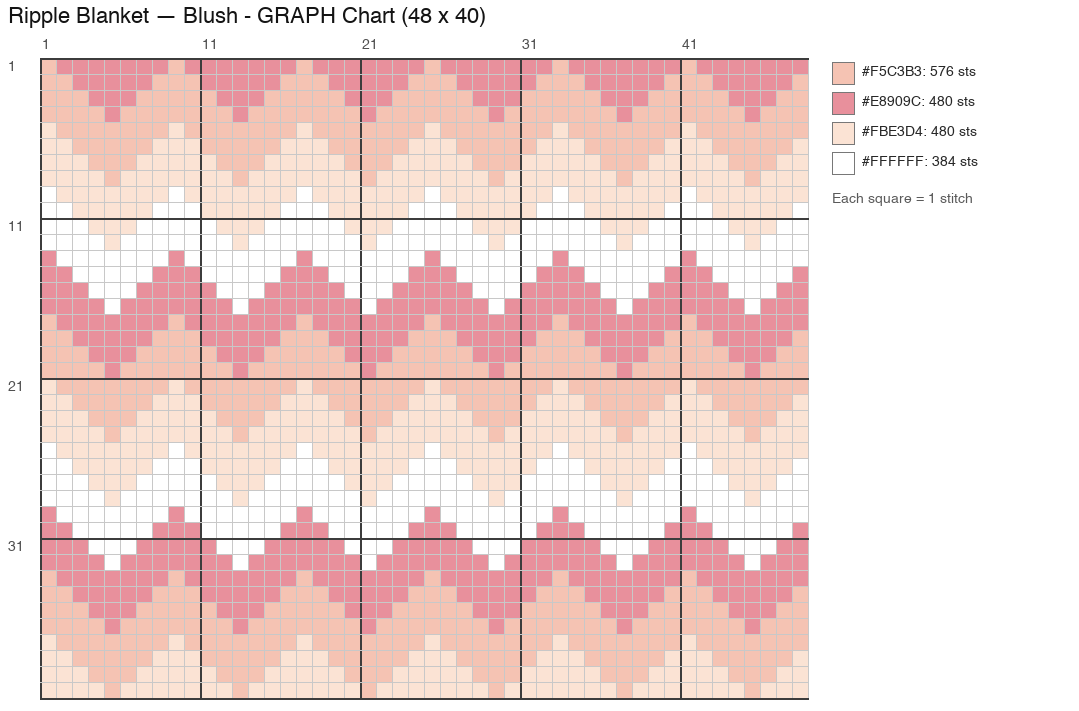
Digital previewRipple Blanket — Blush crochet chart, 48 × 40 (one repeat), 4 colors

Ripple Blanket — Blush

Difficulty
Easy
Technique
Single crochet ripple
Chart size
48 × 40 (one repeat)
Colors
4
Yarn needed
throw ≈ 2,800–3,200 yds
Source
Original pixel design

The classic zigzag in blush pinks and cream. The chart shows one chevron repeat — repeat it across for any blanket width.

Download chart (PNG) ⬇️
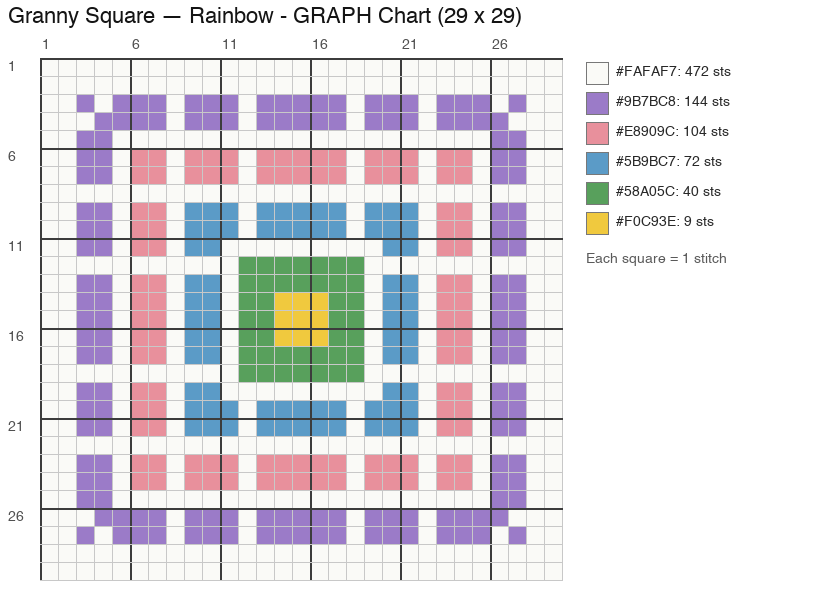
Digital previewGranny Square — Rainbow crochet chart, 29 × 29 (one square), 6 colors

Granny Square — Rainbow

Difficulty
Easy
Technique
Granny square (join-as-you-go)
Chart size
29 × 29 (one square)
Colors
6
Yarn needed
≈ 60 yds per square
Source
Original pixel design

The timeless granny square in six cheerful colorways. Make 30 for a baby blanket, 80 for a throw.

Download chart (PNG) ⬇️
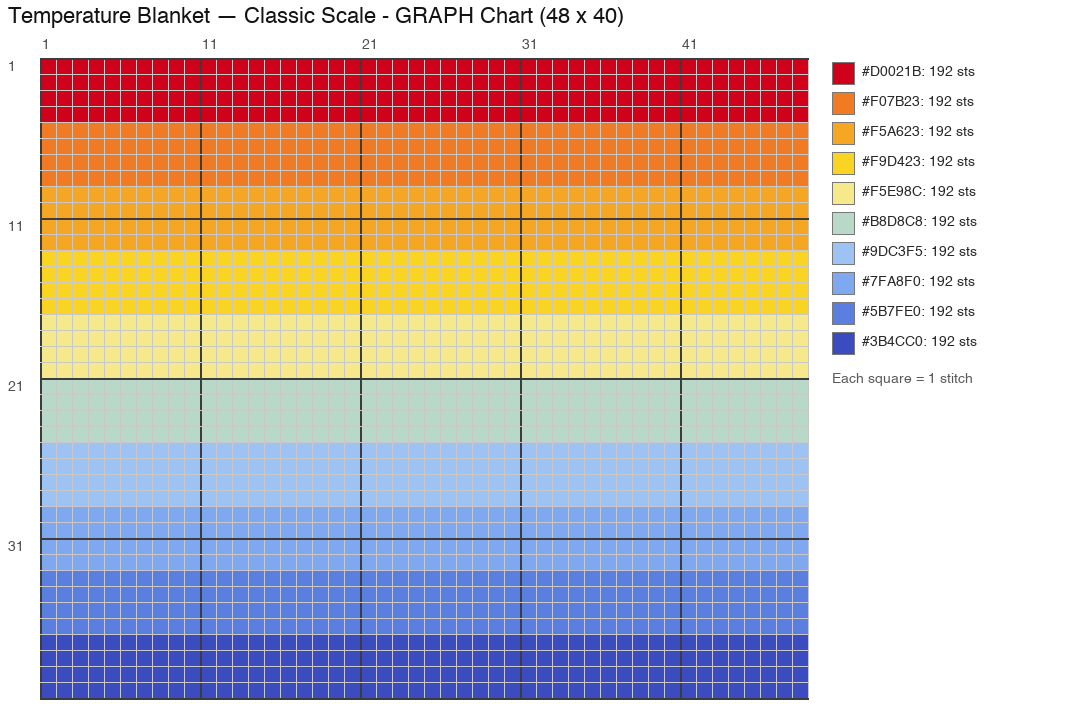
Digital previewTemperature Blanket — Classic Scale crochet chart, 48 × 40 (sample layout), 10 colors

Temperature Blanket — Classic Scale

Difficulty
Easy
Technique
Stripe rows (any stitch)
Chart size
48 × 40 (sample layout)
Colors
10
Yarn needed
year blanket ≈ 2,500–3,500 yds
Source
Original pixel design

One row per day, color by the daily high. This is the classic 10-shade scale from deep winter blue to summer red.

Download chart (PNG) ⬇️

How to crochet it

  1. Pick your blanket style

    Ripple and gingham are worked as repeating charts across the blanket; granny squares are made individually and joined; temperature blankets add one row per day.

  2. Size it with the chart

    The charts show one repeat or one square. Measure your gauge, then repeat across to your target width — the yarn calculator turns your stitch count into skeins.

  3. Work in worsted weight

    All charts are designed for #4 worsted yarn with a 5.0–5.5 mm hook. Acrylic for washability, cotton for drape.

Make your own chart

Have a photo you love? The free generator turns it into a stitch-ready chart — grid, palette, and stitch counts included.

Frequently asked questions

Which crochet blanket pattern is best for beginners?

Start with the gingham (two repeating colors, huge blocks) or the granny square — the granny is the most forgiving pattern in crochet because mistakes hide in the texture. Ripple blankets come next: the zigzag looks impressive but is just increases and decreases on a repeat.

How much yarn do I need for a crochet blanket?

In worsted weight: about 1,100 yards for a baby blanket, 2,800–3,500 for a throw, 6,000+ for a queen. Use the yarn calculator for your exact size — or upload your chart and get per-color yardage from real stitch counts.

Are these blanket patterns really free?

Yes — every chart on this site is free to download for personal use. They're original designs and stitch layouts made for this site, not scans of someone else's paid patterns.

What's the difference between a chart and a written blanket pattern?

A written pattern is row-by-row text instructions; a chart is the design drawn as a colored grid where each cell is one stitch. Charts are faster to follow for colorwork and repeats — and ours include per-color stitch counts for yarn planning.

Can I make a blanket chart from my own photo or idea?

Yes — the pattern generator converts any photo or image into a stitch grid with a counted palette. Pets, kids' drawings, and logos all become blanket charts in seconds.